CLM System Redesign
35% decrease in call response time
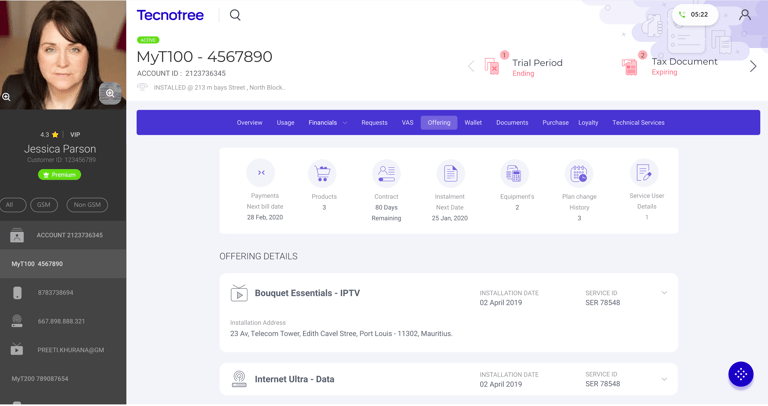
Unified customer interactions across legacy CRM and CLM systems for a telecom company into a single customer lifecycle and relationship management platform through strategic research, iterative design, and user validation.
How might we transform generic offshore CRM designs into a user-centered system that reduces MTNI's call center response times while supporting rapid customer growth and operational efficiency?
Problem to solve
Project Overview
Project Name: Redesign of Tecnotree Core CLM System for MTNI
Duration: 5 months - 2020
Role: Senior UX Designer
Team: A design manager & 3 UI designers
Company: Tecnotree
Client: MTNl (major telecommunications operator)
My Story!
As the first UX designer for Tecnotree’s onshore operations, I adapted Tecnotree’s human-centered Digital Customer Lifecycle Manager (DCLM), part of its broader suite (DCLM, DCM, DOM, and DCBS), which helps telecom operators build personalized customer relationships through automated onboarding. I led end-to-end UX, research, journey mapping, feature design, and usability testing, resulting in streamlined workflows, reduced call queues, and faster, more personalized experiences with real-time 360° insights.
Through a series of business workshops, I discovered a key objective beyond adopting new technologies and improving usability: reducing call center response time. As Irancell’s customer base rapidly expanded, support requests and complaints surged, driving up operational costs and the need for additional agents. By streamlining workflows and enhancing system efficiency, the business aimed to reduce agent workload, cut hiring costs, and maintain competitive service quality. Company Reality:
Rapid Customer Growth: Daily influx of new telecom subscribers
Rising Support Volume: Surge in complaints and inquiries
Operational Cost Pressure: Escalating costs for hiring and training agents
Competitive Demand: Need for faster, higher-quality customer service
Business Challenges
First UX designer for Tecnotree’s onshore division, leading UX strategy and coordinating with offshore teams
Partnered with Product Owners and BAs to define user stories, prioritize features, and align design with business goals
Redesigned core product for MTNI through field studies, on-site interviews, stakeholder surveys, and user testing
My Contribution
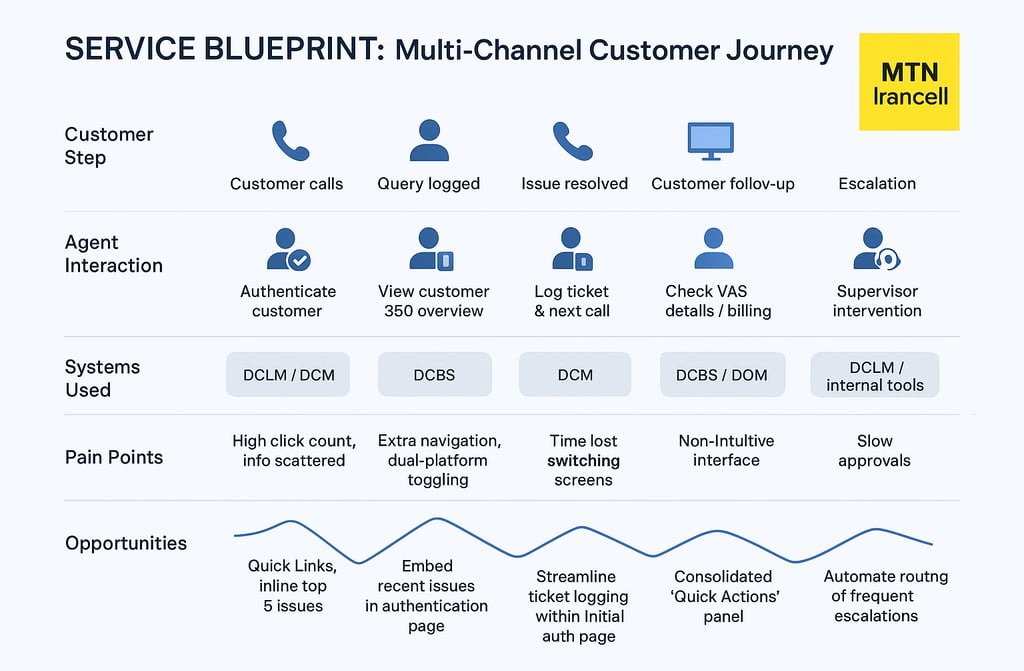
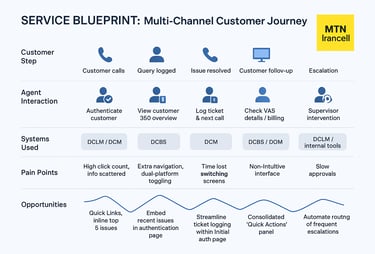
Mapped the relationships across DCLM, DCM, DOM, and DCBS systems
To understand user needs and operational challenges, I led mixed-method research combining workshops, questionnaires, field studies, and stakeholder interviews with call center staff across roles. The goal was to uncover pain points, assess system usage, and identify opportunities for improvement.
Workshops & Questionnaires: Conducted structured surveys and prioritization exercises with supervisors and managers
Field Observation: Spent 4 hours observing live agent–system interactions, and identifying workflow inefficiencies and unused features.
Interviews: Held one-on-one sessions with 11 agents and stakeholders from front office, back office, help desk, and management
Discovery Phase: Understanding the Ecosystem
As my first IT industry role, comprehensive discovery was essential to understand:
Product Portfolio: DCLM, DCM, DOM, and DCBS system relationships and dependencies
Telecommunications Operations: Customer lifecycle management in telecom industry
Regulatory Environment: Iranian telecommunications compliance requirements
Organizational Structure: MTN Irancell's operational hierarchy and decision-making processes
Research Methodology
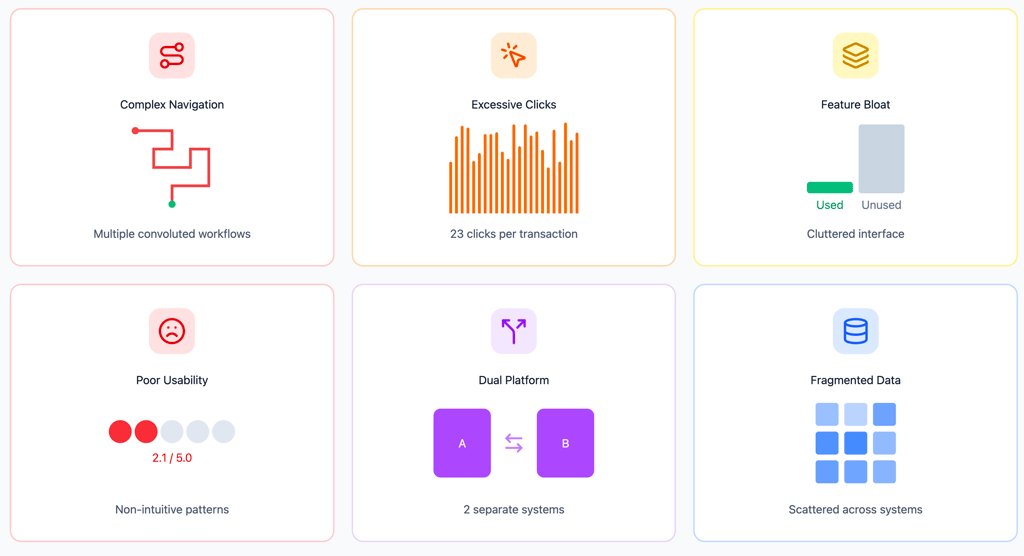
Research Insights
Defining Goals
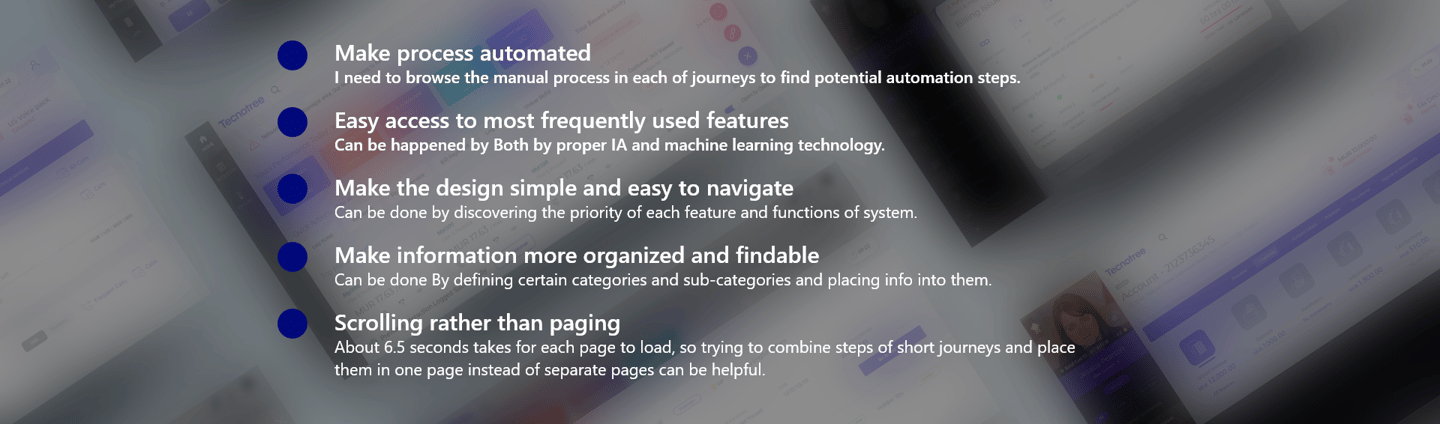
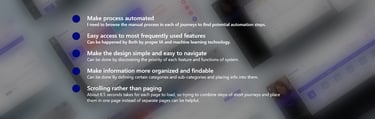
Primary Objective: Reduce call center agent response time to manage growing support volume
Technology Modernization: Adapt new technologies while improving product user-friendliness
Cost Optimization: Avoid proportional hiring increases by improving agent efficiency
Scalability: Build sustainable customer service operations supporting continued business growth
Business Objectives
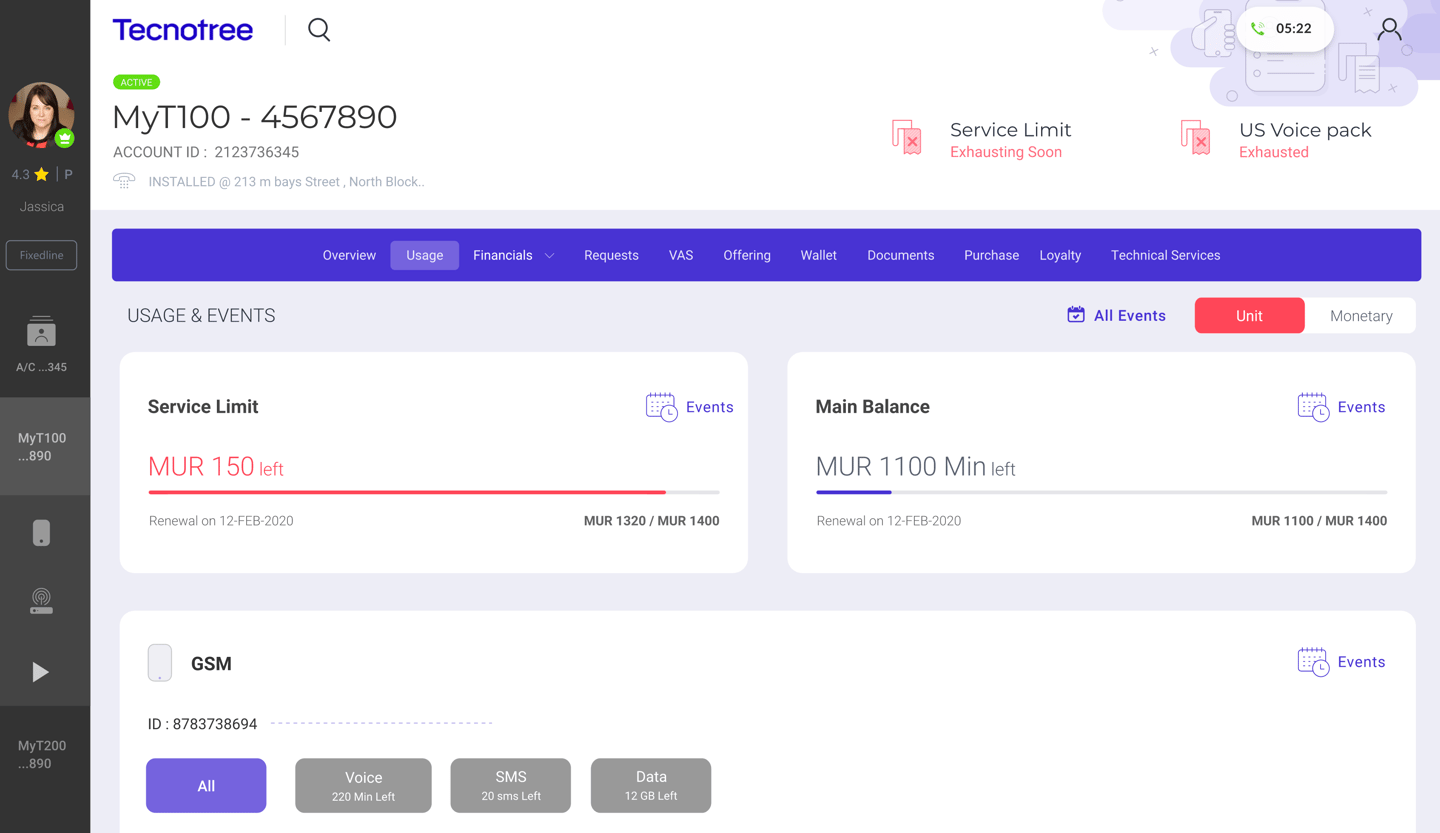
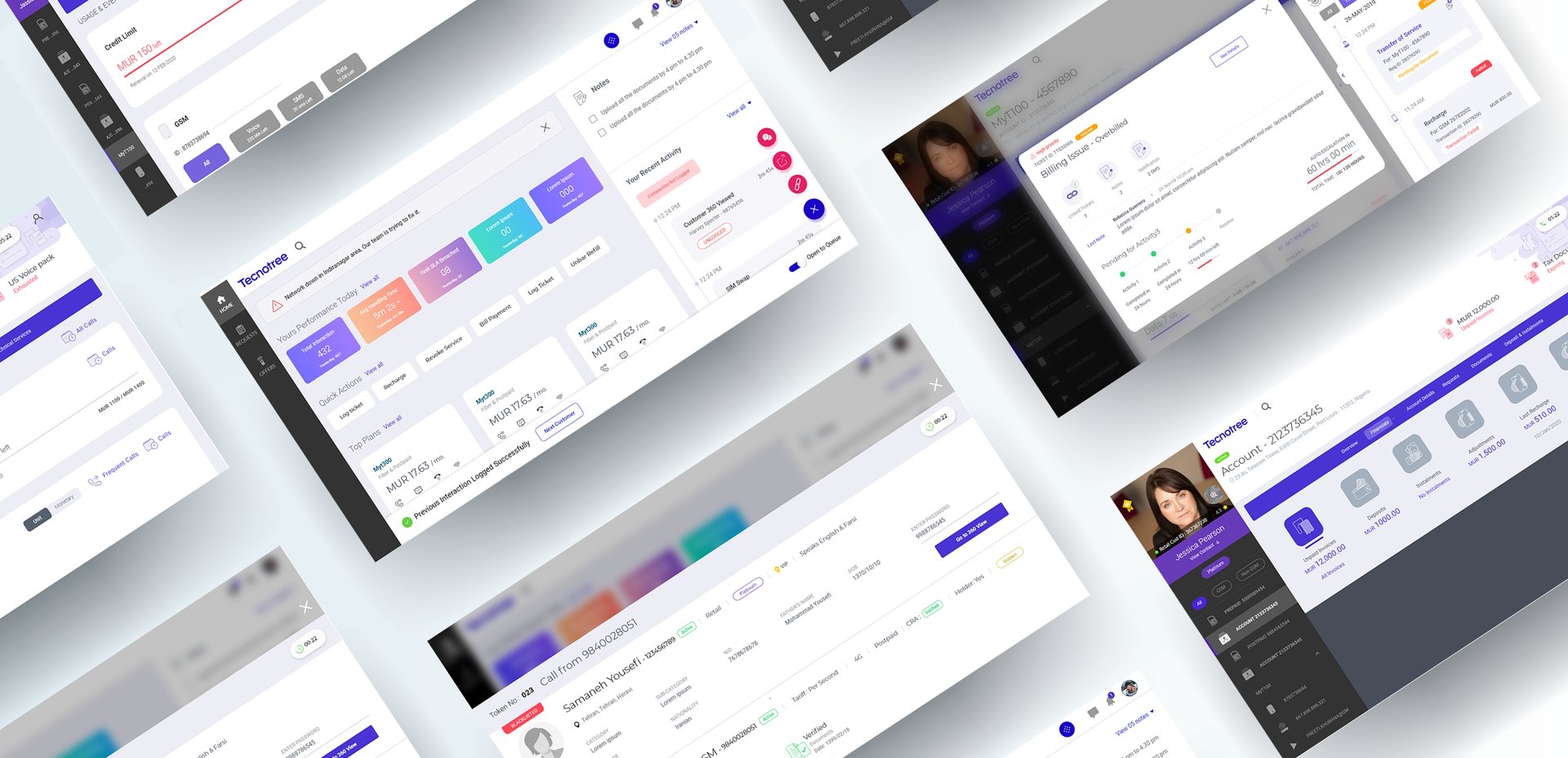
Key screens from the new CLM System
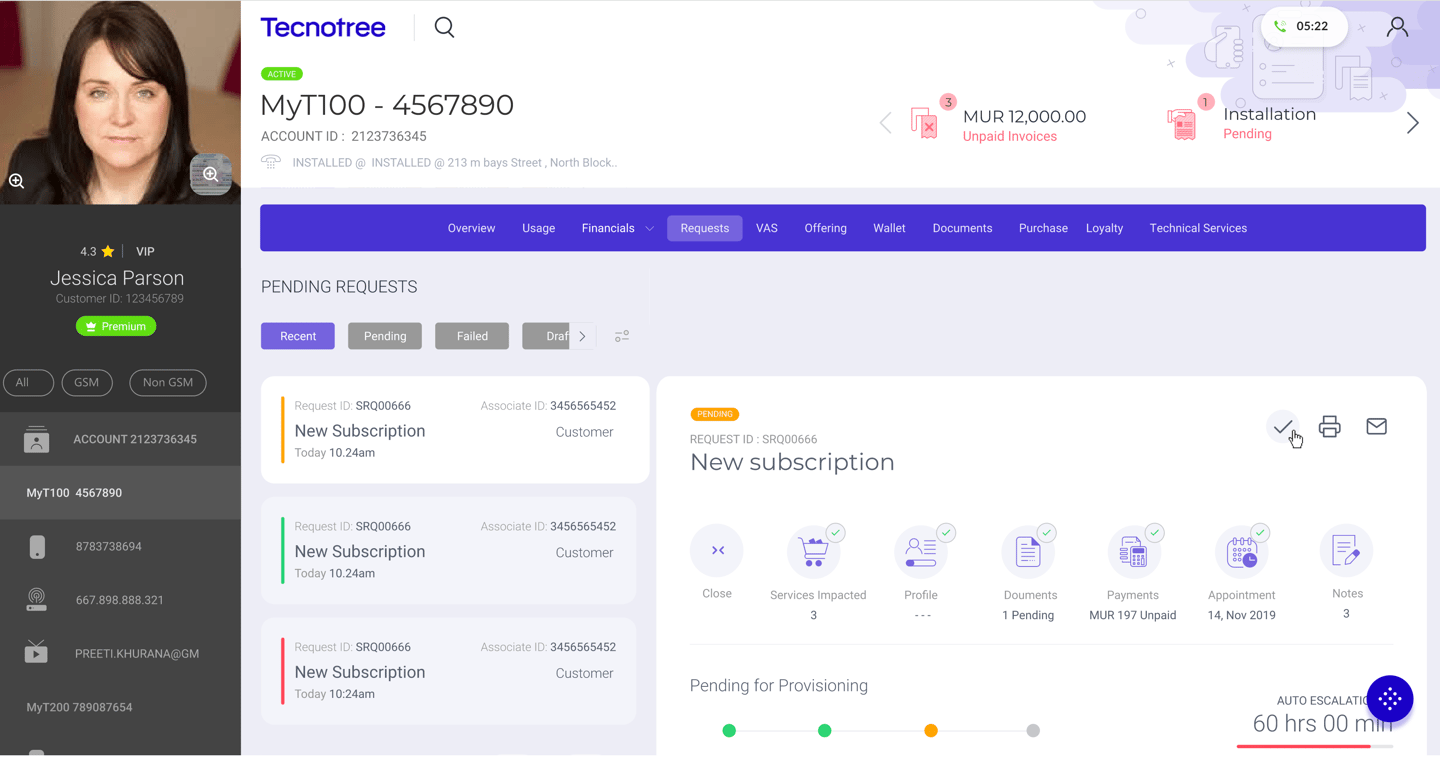
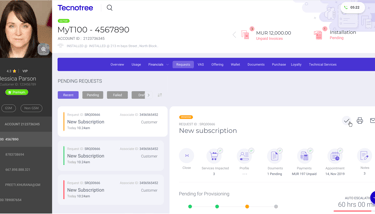
I started by defining personas to determine how many system page versions were needed. I analyzed each role’s tasks, responsibilities, and permissions, focusing on Front Office (call center) and Back Office Agents, who are the primary users. Supervisors and Managers, with similar tasks and permissions, were combined into a single group. Initial design efforts therefore targeted Call Center and Back Office Agents.
Persona-based Dashboard - Role-specific interface optimization
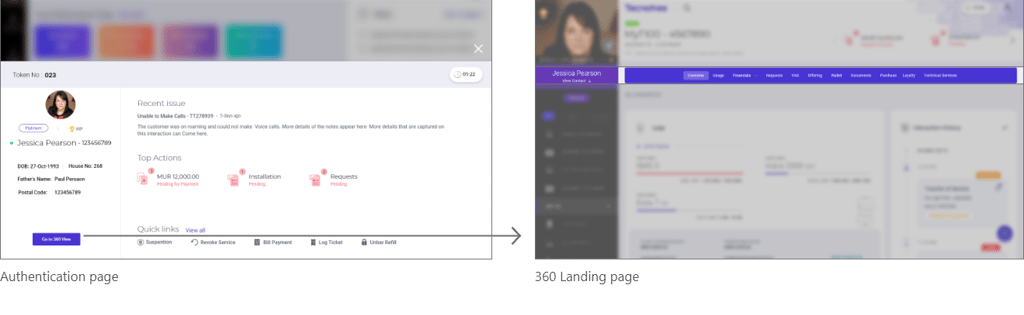
Customer Authentication - Streamlined identity verification process
Customer 360 Landing Page - Comprehensive customer overview
Flexible Search - Advanced customer and account discovery
Trouble Ticket Management - Efficient issue tracking and resolution
Recent Transactions - Quick access to customer activity history
VAS Details - Value-added services information and management
Call Details - Comprehensive call history and context
View Bill - Customer billing information access
Unified Wallet - Integrated financial account overview
Agile Development & Story Prioritization
As part of our agile process, I collaborated with the PO team and business stakeholders to define and prioritize the top 10 critical pages and workflows for the platform including:
Metrics Definition & Success Measurement
I defined usability metrics to measure the CLM system’s efficiency and effectiveness before and after launch: task completion time, number of errors, and task success rate. After observing call center agents handling calls and tickets, I focused solely on task completion time since all agents were experts with the existing system, making errors and success rate metrics irrelevant. The average task completion time for general queries and complaints in the current CLM system was 2 minutes (120 seconds).
The first use case in the UX backlog
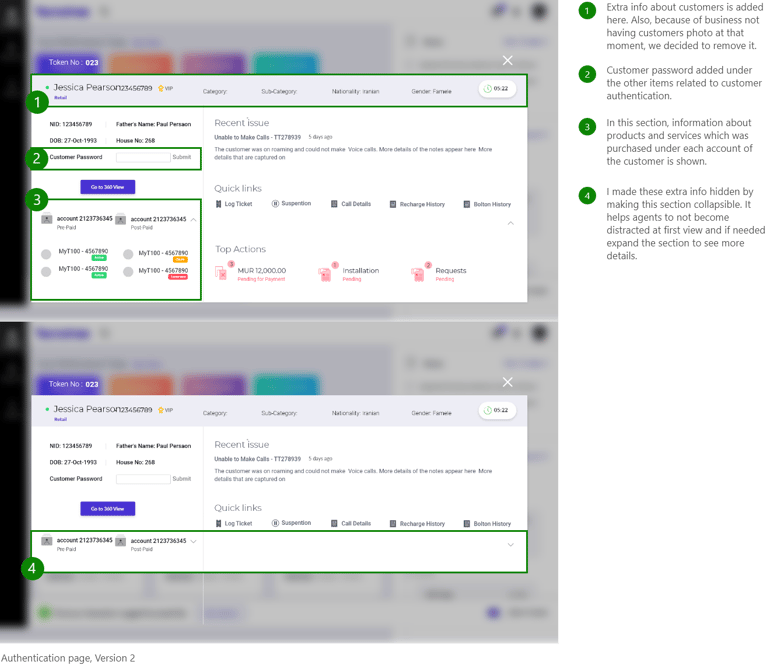
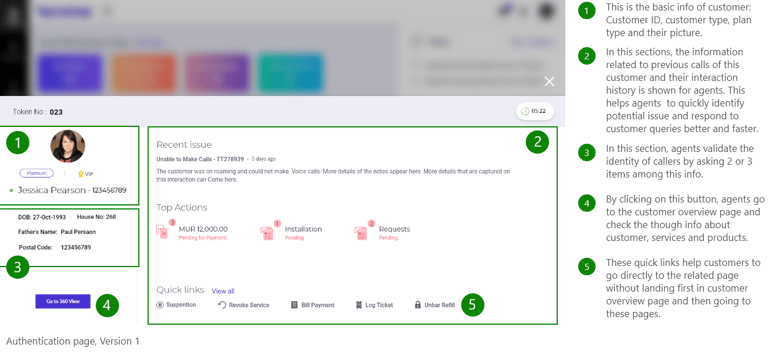
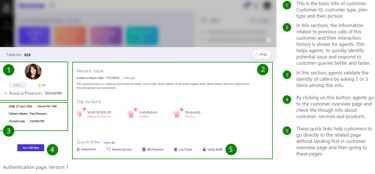
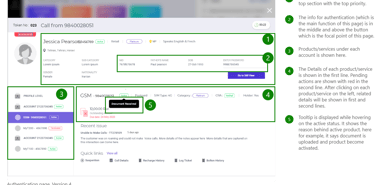
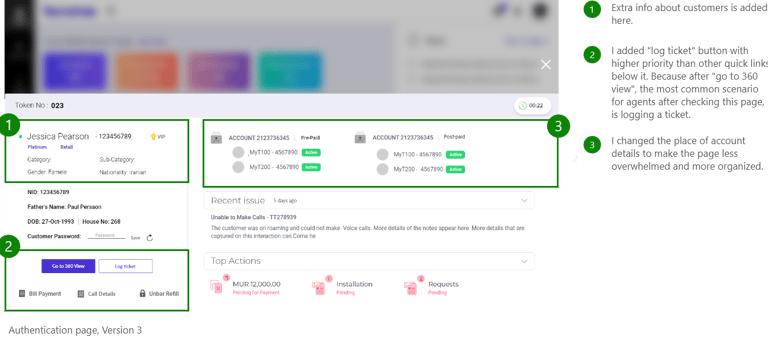
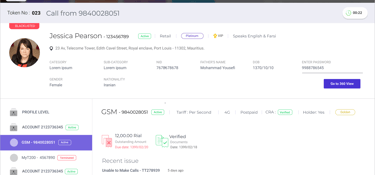
I designed the authentication page for front-office agents to be fast and informative, reducing context switching with key details and quick links. Using analytics data on the top five customer issues and most-used tabs, I surfaced essential info and shortcuts so agents could log common tickets without leaving the page.
Iterative designs - Usability testings
Each journey took 1–2 weeks of focused design with iterative critiques from BAs, PMs, the PO, and design and dev teams, enabling early feedback and faster alignment. I prioritized key elements for customer validation, including “Recent Issues,” “Top Actions,” and “Quick Links,” helping agents resolve inquiries faster. Three versions were designed.
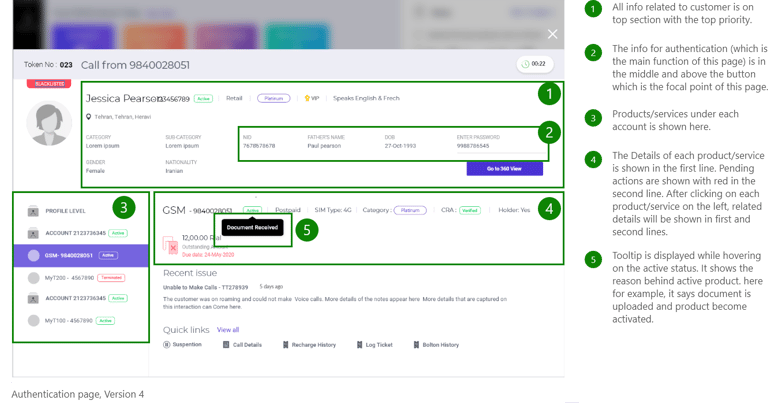
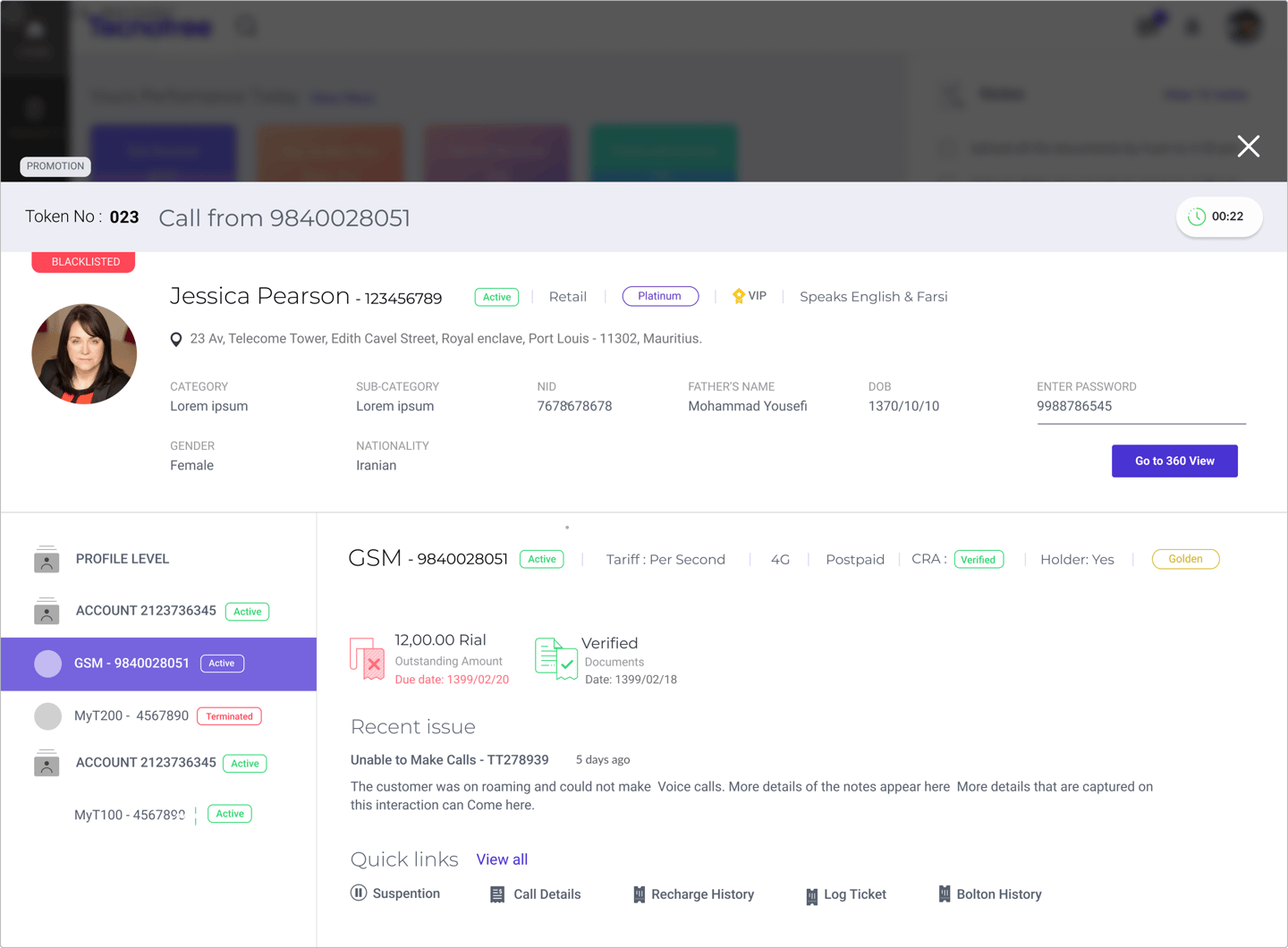
After reviewing the three variations with the product team, I developed version 4, focusing on a clearer layout. In consultation with the design team, we organized the data into three sections instead of two. Once approved by the PO, I created an interactive Adobe XD prototype for full-flow user testing, simulating the live agent experience.
I facilitated one-on-one remote usability sessions with five agents, guiding them through predefined tasks while closely observing navigation patterns, decision-making, and pain points. Overall, the workflow proved intuitive, with the majority of participants completing tasks independently and without additional support.
Key feedback included:
The hover effect felt distracting as the cursor moved across the screen.
The “Top Actions” section could be more prominent, and “Recent Issues” made easier to scan at a glance.
Clearer visual separation between customer validation details and quick links would improve readability.
After sharing the findings with the design and product teams and outlining a plan to implement the feedback, I began working on the next user journey.
Version 5: Instead of hiding the reason a status is active (such as verified documents) behind a tooltip, I displayed the verified documents directly on the page to improve visibility and accessibility.
We successfully reduced the “time on task” metric, bringing the average task completion time for general queries and complaints in the CLM system down to 78 seconds, a 35% decrease in call response time.
Results
Balancing Product Requests with User Experience: The PO requested extensive customer purchase information on the authentication page, which risked overwhelming users and creating friction. I led the effort to structure the content with clear hierarchy and focus, ensuring critical tasks remained intuitive. To mitigate usability risks, I recommended and facilitated targeted user testing prior to full rollout, validating our approach with real users.
Bridging Distributed Teams: As the first onshore designer, I took ownership of aligning internal stakeholders with an offshore design team across a time zone gap (Iran–India). I established structured bi-weekly collaboration sessions, creating predictable touchpoints that improved communication, reduced feedback loops, and ensured cohesive design execution across locations.
Navigating Complex Systems and Stakeholder Expectations: The CLM system included multiple interconnected user journeys across legacy and new workflows. I led the prioritization of key journeys, conducted in-depth analyses of legacy systems, and developed evidence-based talking points for demos. Partnering closely with PMs and BAs, and reviewing SRS documentation rigorously, I shifted stakeholder discussions from “feature parity” concerns to focus on performance improvements and enhanced user experience.